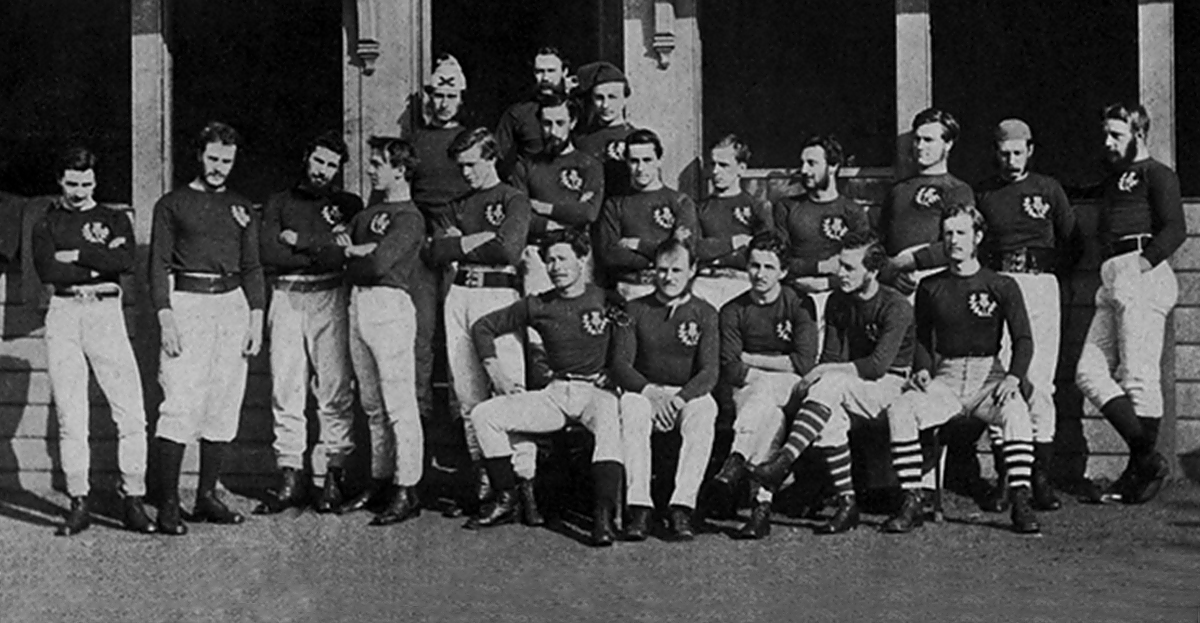
On this day in 1871, the fields of Raeburn Place played host to the world’s first international rugby match in Edinburgh, Scotland. A handful of Scottish rugby clubs had invited any English challengers to an international exhibition. The match was played with slightly modified rules from the game today. It was 20 players per side and two 50-minute periods. Scotland prevailed, having been the only side to successfully convert a try into a goal. In modern rugby, a “try” is when a player crosses the end zone with the ball. You are awarded 5 points, and are then given a chance to kick at the opponent’s goal posts where you can score another 2 points. During the match at Raeburn place, a try was used for the sole purpose of attempting to try and kick a goal. Angus Buchanan of Scotland was the first player to score a try in international rugby, however it was not converted into a goal. Reg Birkett scored the only try for the English side. William Cross of Scotland was the only man to score and convert a try, giving Scotland a 1-0 victory over England. The match was ultimately a great success, becoming a regular fixture in the rugby community.
Today In Sports History (March 27, 1871)




 almostsports.xyz
Leave a comment